


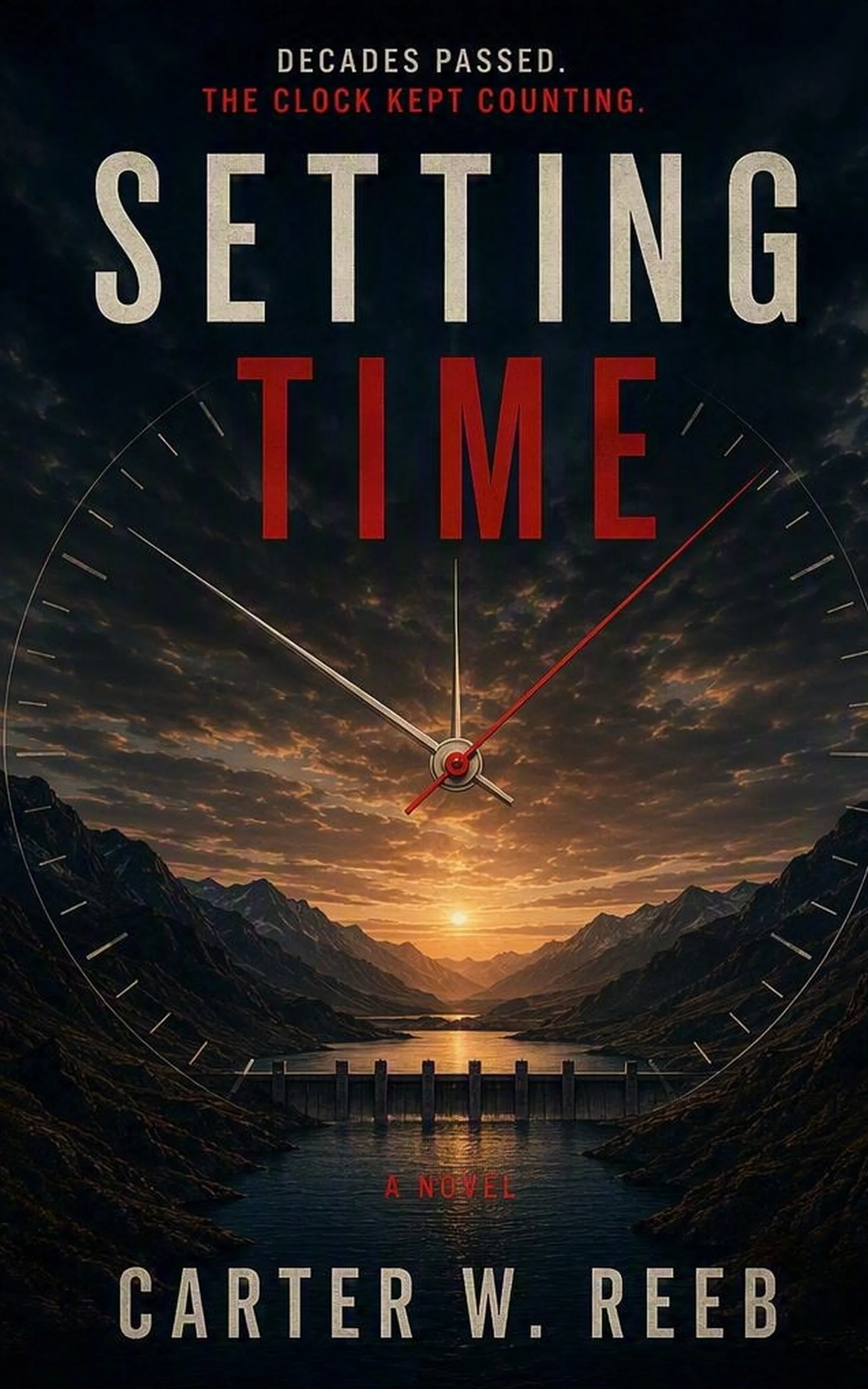
Sloane Kearney brings buildings down for a living. A controlled-demolition engineer with fifteen years of experience on three continents, she has made a career of understanding how structures fail — reading the invisible language of cracks, load paths, and sixty-year-old concrete the way other people read faces. Every building wants to fall down. She just helps.
When the Georgian government hires her to demolish a condemned Soviet-era hydroelectric dam in the mountains of the Caucasus, the job looks routine: assess the structure, design the blast sequence, bring it down safely before spring snowmelt turns the unmanaged reservoir into a flood. Six weeks. Straightforward.
Then her ground-penetrating radar finds something that should not exist.
Deep inside the dam's concrete mass — in a section every engineering drawing shows as solid, homogeneous structure — her instruments detect organized metallic objects, active wiring, and electromagnetic emissions. Something inside the dam is powered. Something is transmitting. And it has been for decades.
Within hours of reporting the anomaly, Sloane's permits are revoked. A competing demolition crew arrives with emergency authorization and begins placing charges in a pattern she recognizes immediately: not optimized for safety. Optimized for speed toward one specific section of the structure.
Someone wants what she found buried under forty thousand tonnes of rubble before anyone else can reach it.
Now Sloane has six days — six days before the competing demolition reaches the sealed chamber and destroys whatever Cold War secret the concrete has been keeping for nearly forty years. Six days to understand what she's found, who is protecting it, and why a respected European entrepreneur is willing to destroy an entire dam rather than let her finish a survey.
Her only ally is a Georgian civil engineer whose quiet competence she initially mistook for bureaucratic passivity — a man who reads political silence the way she reads concrete, and whose twelve-dollar Casio watch keeps time just as reliably as her ten-thousand-dollar Breitling.
The clock is ticking. It has been ticking since 1987.
Setting Time is an adventure thriller that combines the engineering authenticity of Andy Weir with the globe-trotting pace of James Rollins — a novel where the science is real, the danger is physical, and the protagonist survives by knowing exactly how things fall apart.
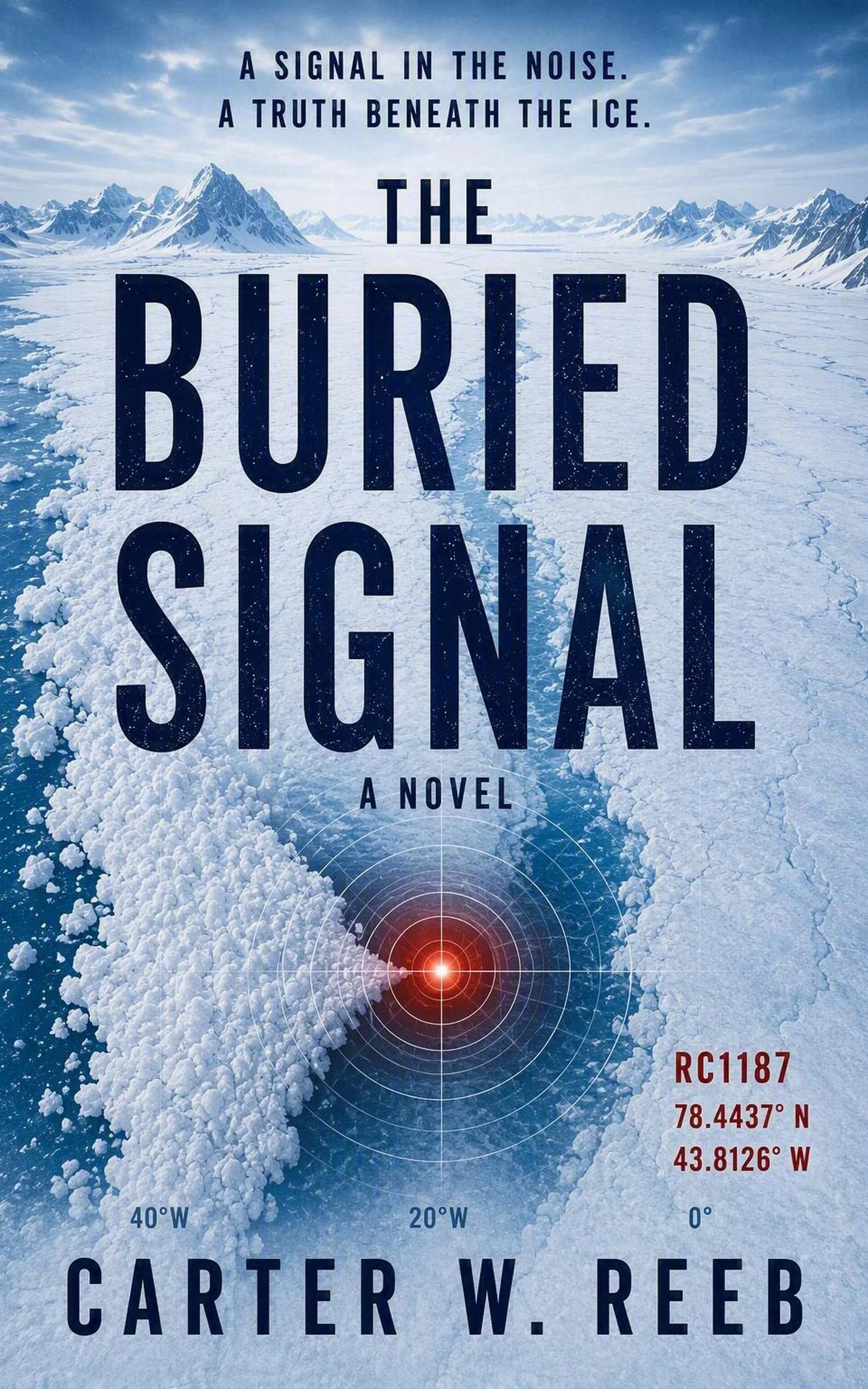
A dead man's question mark. A daughter's relentless search for the truth buried beneath the ice.
At 2:47 AM on a Tuesday in March, geodesist Nora Ellis finds what shouldn't exist — a faint, persistent signal hiding in the noise of four independent measurement systems, all pointing at the same patch of ice-covered bedrock in northern Greenland. The anomaly is too small for anyone to notice. Unless they're looking closely. Unless it's personal.
Because thirty years earlier, Nora's father scrawled three words in the margin of his field notebook before vanishing into the silence of an unsolved question: RC1187 — revisit?
Now, working at a secretive geodetic research firm, Nora must navigate institutional resistance, scientific rivalry, and her own crippling fear that she's chasing a ghost — grief dressed as pattern recognition. As her investigation stretches from the Arctic tundra of Greenland to the ice sheets of Antarctica, Nora confronts a discovery that could reshape our understanding of how the Earth remembers — and how fast the ice is truly disappearing.
Part scientific thriller, part meditation on inheritance and the questions that outlive us, The Buried Signal is a novel about what it means to inherit a dead man's curiosity — and what it costs to follow it all the way to the truth.
For readers of Richard Powers, Kim Stanley Robinson, and Barbara Kingsolver.
Sloane Kearney brings buildings down for a living. A controlled-demolition engineer with fifteen years of experience on three continents, she has made a career of understanding how structures fail — reading the invisible language of cracks, load paths, and sixty-year-old concrete the way other people read faces. Every building wants to fall down. She just helps.
When the Georgian government hires her to demolish a condemned Soviet-era hydroelectric dam in the mountains of the Caucasus, the job looks routine: assess the structure, design the blast sequence, bring it down safely before spring snowmelt turns the unmanaged reservoir into a flood. Six weeks. Straightforward.
Then her ground-penetrating radar finds something that should not exist.
Deep inside the dam's concrete mass — in a section every engineering drawing shows as solid, homogeneous structure — her instruments detect organized metallic objects, active wiring, and electromagnetic emissions. Something inside the dam is powered. Something is transmitting. And it has been for decades.
Within hours of reporting the anomaly, Sloane's permits are revoked. A competing demolition crew arrives with emergency authorization and begins placing charges in a pattern she recognizes immediately: not optimized for safety. Optimized for speed toward one specific section of the structure.
Someone wants what she found buried under forty thousand tonnes of rubble before anyone else can reach it.
Now Sloane has six days — six days before the competing demolition reaches the sealed chamber and destroys whatever Cold War secret the concrete has been keeping for nearly forty years. Six days to understand what she's found, who is protecting it, and why a respected European entrepreneur is willing to destroy an entire dam rather than let her finish a survey.
Her only ally is a Georgian civil engineer whose quiet competence she initially mistook for bureaucratic passivity — a man who reads political silence the way she reads concrete, and whose twelve-dollar Casio watch keeps time just as reliably as her ten-thousand-dollar Breitling.
The clock is ticking. It has been ticking since 1987.
Setting Time is an adventure thriller that combines the engineering authenticity of Andy Weir with the globe-trotting pace of James Rollins — a novel where the science is real, the danger is physical, and the protagonist survives by knowing exactly how things fall apart.
New & Noteworthy
Sloane Kearney brings buildings down for a living. A controlled-demolition engineer with fifteen years of experience on three continents, she has made a career of understanding how structures fail — reading the invisible language of cracks, load paths, and sixty-year-old concrete the way other people read faces. Every building wants to fall down. She just helps.
When the Georgian government hires her to demolish a condemned Soviet-era hydroelectric dam in the mountains of the Caucasus, the job looks routine: assess the structure, design the blast sequence, bring it down safely before spring snowmelt turns the unmanaged reservoir into a flood. Six weeks. Straightforward.
Then her ground-penetrating radar finds something that should not exist.
Deep inside the dam's concrete mass — in a section every engineering drawing shows as solid, homogeneous structure — her instruments detect organized metallic objects, active wiring, and electromagnetic emissions. Something inside the dam is powered. Something is transmitting. And it has been for decades.
Within hours of reporting the anomaly, Sloane's permits are revoked. A competing demolition crew arrives with emergency authorization and begins placing charges in a pattern she recognizes immediately: not optimized for safety. Optimized for speed toward one specific section of the structure.
Someone wants what she found buried under forty thousand tonnes of rubble before anyone else can reach it.
Now Sloane has six days — six days before the competing demolition reaches the sealed chamber and destroys whatever Cold War secret the concrete has been keeping for nearly forty years. Six days to understand what she's found, who is protecting it, and why a respected European entrepreneur is willing to destroy an entire dam rather than let her finish a survey.
Her only ally is a Georgian civil engineer whose quiet competence she initially mistook for bureaucratic passivity — a man who reads political silence the way she reads concrete, and whose twelve-dollar Casio watch keeps time just as reliably as her ten-thousand-dollar Breitling.
The clock is ticking. It has been ticking since 1987.
Setting Time is an adventure thriller that combines the engineering authenticity of Andy Weir with the globe-trotting pace of James Rollins — a novel where the science is real, the danger is physical, and the protagonist survives by knowing exactly how things fall apart.